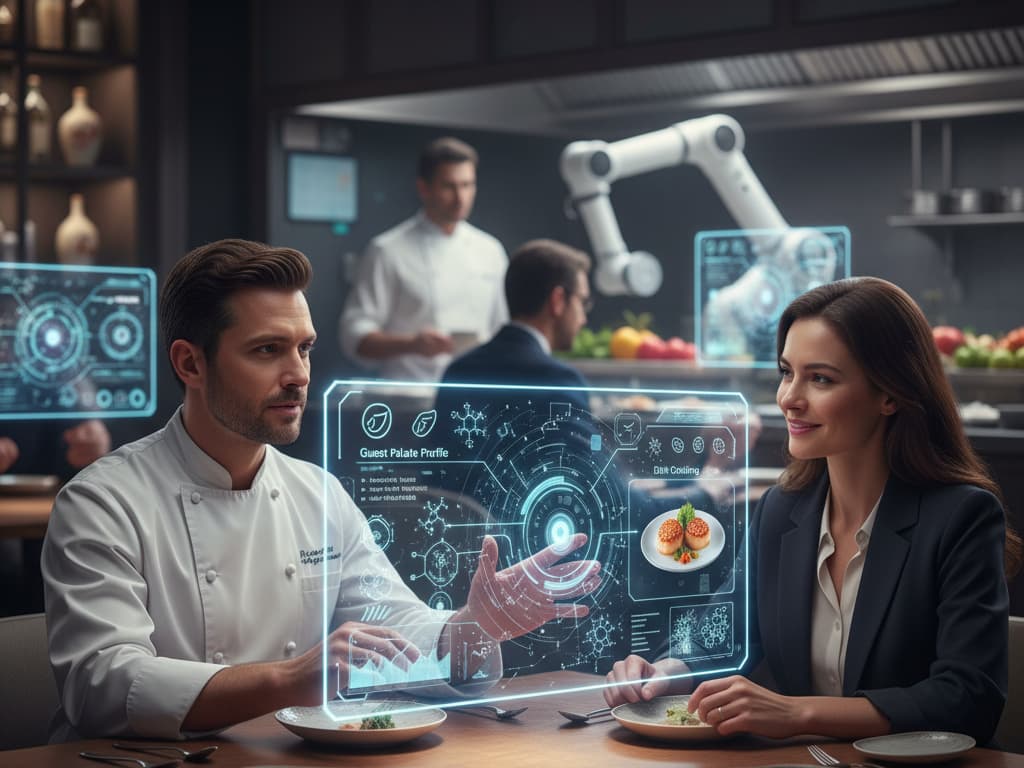
A New Kind of Taste Intelligence
In the next decade, restaurants won’t just know what you like to eat—they’ll know why you like it.
Picture sitting down and being offered a menu tailored not just to your diet or past orders, but to your personal flavor profile. The system understands that you prefer citrus over spice, that you tend to order lighter meals at lunch, and that you respond well to dishes with texture contrast.
This isn’t guessing. It’s data. AI can now track, analyze, and predict taste preferences with a level of precision that was impossible a few years ago. The result? A new kind of dining—one that feels personal, effortless, and deeply satisfying.
How Flavor Profiling Works
AI flavor profiling starts with information—past orders, ratings, ingredient patterns, and even sensory data from smart devices. Over time, the system learns how a guest’s taste evolves.
For example, if a diner consistently enjoys dishes that combine umami with acidity, the AI will spot that pattern and surface new menu items that fit the same profile. If they begin exploring plant-based options, the recommendations shift accordingly.
It’s like having a sommelier, a chef, and a nutritionist all working quietly in the background to make sure every meal feels right.
From Data to Delight
Restaurants already gather tons of information—loyalty history, order frequency, peak dining times. AI adds a layer of intelligence that turns that data into action.
When connected to menu systems, AI can:
- Recommend flavor combinations for chefs based on what guests respond to.
- Adjust seasoning or ingredient ratios for local tastes.
- Highlight dishes that match the mood, weather, or occasion.
Over time, the system can even help predict emerging flavor trends by spotting what groups of diners start gravitating toward.
This turns flavor from guesswork into a living, evolving conversation between the restaurant and its guests.
The Kitchen of the Future
Behind the scenes, AI flavor profiling helps chefs create smarter menus.
By analyzing which dishes earn the highest satisfaction scores and repeat orders, the system can suggest how to refine recipes. It might find that a hint of smokiness increases guest enjoyment, or that a certain sauce performs better when paired with local produce.
Instead of following generic food trends, chefs can shape menus around their guests’ real preferences—one dish at a time.
And because this process happens in real time, the kitchen can react faster to supply changes, seasonal ingredients, or even regional taste shifts.
What It Means for Diners
For guests, AI-powered dining feels intuitive. There’s less decision fatigue and more discovery.
You might open your restaurant app and see “Recommended for You” dishes that align perfectly with your preferences—but also introduce something new, just outside your usual comfort zone.
Dining becomes less about choosing from a list and more about having a conversation with the system that understands your tastes.
And the more you eat, rate, and explore, the more accurate and personal it becomes.
Beyond Personalization: Emotional Dining
The next stage of flavor profiling isn’t just about what tastes good—it’s about how food makes people feel.
AI will be able to read emotional cues from reviews, voice tone, or even wearable data. If someone tends to crave rich, comforting meals on stressful days, the system can respond with thoughtful suggestions.
Restaurants can start building experiences that meet emotional needs as well as physical ones. Food becomes both data-driven and deeply human.
Ethical Taste and Transparency
Personalization raises important questions about privacy and data use. The best systems will be transparent—showing diners how their data shapes their experience and giving them full control.
When used responsibly, flavor profiling doesn’t manipulate taste—it empowers choice. It helps restaurants serve better meals, reduce waste, and build trust.
It’s not about replacing the chef’s creativity. It’s about giving it sharper focus.
The Road Ahead
Flavor profiling is still young, but it’s growing fast. Major food brands and restaurants are already experimenting with AI-driven menu design, sensory mapping, and predictive taste modeling.
By 2035, this technology could be as common as digital ordering is today.
Menus will no longer ask, “What do you want to eat?”
They’ll ask, “What flavor fits you right now?”
At MenuLab.ai, we see flavor profiling as the next step in intelligent dining—where every plate reflects not just what’s available, but who you are.
It’s food that learns with you.